Category Archives: news

Colorado Tourists Feel Threatened By Sheepdogs

As someone who used to work extensively with wolves, I have something of a background with, and fondness for, livestock guarding dogs.  These dogs are a primary, generally quite effective, defense for ranchers against local predators, including wolves.  They live and roam with the flock, providing 24 hour protection, at little cost.  The process works via carefully raising dog puppies with the flock, so that the pups become socialized to the sheep — the pups become kind of “honorary sheep” and fiercely defend their adopted “conspecifics”.  This can be protection for both predator and prey.  In Africa, dogs are employed to defend livestock against cheetahs — protecting the stock from the cheetahs, and the cheetahs from the wrath of the livestock owners.

Today I found myself looking at an article which suggests the dogs might be a little too fierce.  The dogs “snarl”, and “on some occasions, chase” tourists around the Molas Pass area in the San Juan National Forest.  I am curious as to how close the tourists are getting — in the wild back country of Colorado, which I recall being a very wide-open place — to the flocks for the dogs to become alarmed.  The dogs generally do not roam far from their flocks and do not usually become aggressive unless they, or the sheep they protect, are directly and closely approached.

In any case, “snarling” and “chasing” things that get too close to the sheep are kind of required behaviors for livestock guarding dogs.  They aren’t trained to be aggressive, but they are not specifically bonded to humans, either.  They are designed to deter the approach of unfamiliar mammals (and that includes humans) to their adopted flock.  Wasn’t that kind of the point?

However, this is just a briefly trending argument between two groups of people (ranchers and tourists) who want to use the same piece of land for two different activities, and it isn’t a particularly new thing (people have been arguing about land use for years and years).  What is most interesting to me is the photo accompanying the article I first saw (which was not the original, source article).  The original, source article has photos of Akbash guard dogs doing what they do 99% of the time — standing in a field, quietly surrounded by sheep.  The article I first saw used a “file photograph” of two dogs fighting to illustrate the exact same story.  Also, contrast the two titles: the original title, “Problem dogs in backcountry?“, and the title of the story with the fighting dog photo, “Fierce sheepdogs alarming tourists in SW Colorado“.

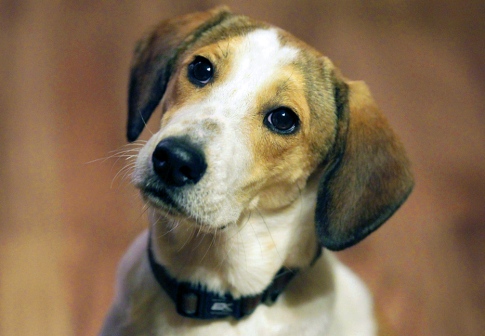
Same article, two entirely different slants — brought about simply by changing the title and the accompanying photo.  Another good reason to always check the source of an article, no matter where it’s published.  (For full disclosure, the photo I used for this post came from this site.)

This is Not How You Make a Point

Arkansas Democratic campaign manager’s cat killed and left for children to find, with political message scrawled on its corpse.

This is not how grown-ups say, “I disagree with your position on the economy.”

This is a chimpanzee threat display.  Pure and simple.  Except, honestly, that chimps are nicer in that they generally use inanimate objects to threaten each other.

This very human tendency for frustration to emerge via the arms when it can’t fit out through the mouth is why I had to wait three years to start working out what I had to say about the treatment of laboratory animals and the current state of the system.  My original expressions of outrage, while I was still open-mouthed and freshly damaged by the experience, might have looked a lot like this — flailing, gibbering, violent — except that I am a grown-up and I don’t argue through violence.  People don’t listen to what you have to say when you are hurting them — they just turn around and hurt you back.  And then it goes on and on, like chimps throwing rocks at one another.  This ultimately decides nothing except which chimp is bigger, and it certainly does not make the losing chimp likely to change its mind and side with the winner — it results in a very angry chimp who starts stockpiling more rocks.

Keeping Animal Abuse Private

A model-aircraft hobbyist recently made an accidental discovery while flying his model airplane, equipped with camera, over the Columbia Packing Company, a Dallas, Texas meatpacking plant: a river of suspiciously red effluence flowing from behind the plant, pouring into the Trinity River.  According to the article, based on the information provided by the hobbyist, “a local investigator was dispatched within 20 minutes, and onside within another 20”, and shortly thereafter the EPA, TCEQ, and Texas Parks and Wildlife executed a search warrant on the plant, finding “a pipe not connected to a waste water system“, apparently deliberately.

The scary part here is the immediate defense brought up (not necessarily by the plant itself, but by people in the comments section of several pages announcing the discovery).  The argument is that the hobbyist was invading the plant’s privacy by taking photographs from his plane.

Where does the right to privacy end?  Is it okay to dump biological agents (e.g., pig blood) into waterways as long as you’re not caught?  Do people who are committing crimes have reasonable expectation of privacy while doing so?  This is one of those questions where I simply do not have the legal background to form an answer.  It’s a complicated mess.  It’s cropped up before, and we’re still arguing about it.

This sort of thing affects the ability of the general public to report problems of all kinds — not just environmental damage but also animal cruelty.  Photographs are some of the best evidence in these cases, and are vital to construction of an effective prosecution.  Making it difficult for photographs or other recorded evidence to be admitted in court is a primary retaliatory response from organizations and individuals caught red-handed by that evidence.  Generally, those interested in recording documentation in order to report issues are instructed to take photographs from a public road so they can avoid having the evidence dismissed amid counter-charges of trespassing.  Well, somewhere above the level of your house or building, the area becomes “public access” again.  How high does a plane need to be flying before it’s out of your curtilage (owned area or property)?  Is Google Maps (which, notably, takes its “street view” photos from the public road, and its aerial photos from satellites) invading our privacy?  By the way, here’s Google’s aerial picture of the packing plant (also, notably, capturing a Very Red River).

It’s kind of important that we answer questions like these, partly because more people are getting access to the kind of technology which lets you fly camera-enabled model planes, but also because companies are using this “privacy” defense to attempt to pass laws preventing people from photographically documenting issues.

New Book Available on Wolf Hybrids

The bulk of my animal career has been spent working with the socialized, hand-raised wolves of Wolf Park, a wildlife facility in Battle Ground, Indiana.  While working there I met a variety of people who had issues, of one kind or another, with wolf hybrids (also known as wolfdogs, or wolf x dog hybrids).  The problems these people (and their animals) faced inspired me, and a coworker of mine, to write a book, so that people who suddenly find themselves confronted with something labeled a “wolf hybrid” would have somewhere to turn.

The book is now available for purchase.  It can be purchased through Wolf Park, if you’d like to support a nonprofit animal facility.  It can be purchased through the publisher, Dogwise Publishing, if you’d like to support an excellent publishing house with an emphasis on dogs, training, and canine behavior in general.  It can also be purchased through Amazon if you would like to take a look inside the book before purchasing it.

It was our goal, in writing this book, to make the world a little better for critters that got inadvertently mixed up in the “wolf hybrid” controversy — whether they be wolves, dogs, wolf hybrids, or the people who meet them.  If you are a shelter worker, a rescuer, a veterinarian, an animal control officer — or just someone who loves dogs and the things that dogs do — please consider picking up a copy.  The more people know about these wonderful animals, the better.

Can’t Spell “Slaughter” Without Doublespeak

Even though it happens all the time, people hate talking about killing animals.  One of their favorite ways of avoiding the topic is to use euphemisms.  Rather than “killing” animals at the slaughterhouse, they “stun” them; rather than “dismembering” them they “render” or “process” them; and animals do not get crippled or maimed in transit to the slaughterhouse — instead they are “downed” — ad nauseam.

With this in mind: a quiet little law has recently been passed which makes it possible for the US to resume horse slaughter operations.  This sounds gruesome but it might be considered to be of net benefit to the horses.  Horse slaughter was originally banned in the US in order to reduce the number of horses slaughtered for meat, but the same number of horses still got slaughtered after the ban — they just got shipped to Mexico or Canada first.  The only effect of the slaughter ban was to add a horrific multi-day transit in un-air-conditioned cattle trucks to the horses’ experience.  So, we still need to do some work to solve the issue of horses in the slaughterhouse — but, in the meantime, at least we removed that awful transit experience.  Progress.

The Arabian Professional and Amateur Horseman’s Association wanted to show support for the Arabian Horse Association, which came out in favor of this law — but how to show its support without appearing to say, “Oh, good, we’re killing horses again”?  The APAHA decided to use a tragically awful euphemism:

The Arabian Professional and Amateur Horsemen’s Association voted, with unanimous approval, to thank the AHA Board for continuing your support for the re-opening of the equine terminal marketplace, and to join with the AHA in support of the reinstatement of equine processing in the United States.

George Carlin is rolling over in his grave.  The re-opening of the equine terminal marketplaceEquine terminal marketplace!  What on earth is the equine terminal marketplace?  They’re not going to slaughter — they’re going shopping!

Whether you support the rescinding of the ban or not — aren’t we all mature enough to admit, out loud, that humans kill animals for meat?  How are we supposed to solve the problem if we can’t even admit that it exists?  What was wrong with “We are happy that steps are being taken to reduce the suffering of horses bound for slaughter”?  Honestly, they could have just gone with the last paragraph of the original statement:

There are issues to address, certainly, and many different options available to improve the terminal marketplace, among them mobile slaughter units and live web monitoring of plants. As horsemen, breeders, and horse lovers, we are the ones responsible for dealing with these issues, making sure that the terminal marketplace becomes ever more humane, with a quick and dignified passing, without undue stress, and where the horse can go on to be useful to man after his demise, just as he has been for the last 5000 years.

Dog Joins the Monkeysphere

This is just another instance wherein an animal which comes to community attention as an individual (rather than as an anonymous member of a group) suddenly joins the Monkeysphere and becomes worthy of a social bond.

Nobody wanted to adopt an anonymous beagle when he was one of hundreds of unwanted dogs and cats at a shelter in Alabama.  “Hundreds of unwanted dogs and cats” is a huge, vague concept, and it’s hard to form a social bond with, or feel one is personally able to help, “hundreds of unwanted dogs and cats”.  However, once he was brought to national consciousness as an individual dog with a name, people fought over the right to adopt him and a home was almost immediately found.

This is, by the way, why savvy shelters post individual web pages for each animal, with a little story about each, and a name for everybody.  It’s hard to open your heart to “181406M”, but it’s easy to find a soft spot for “Daniel”.

(Daniel, by the way, now has his own blog, and is working to abolish the use of gas chambers for euthanasia of pets in Pennsylvania via Daniel’s Law.  See what you can do when you have a name?)

One Step Forward, One Step Back: Gassing Chickens

via Cheetah100, Flickr Creative Commons

As described in many, many, many books and videos (but especially accessibly by this book, in case you’re interested), large slaughterhouses can process so many animals per hour that workers on the assembly line can have to deal with as many as one animal every five seconds (depending on species).  This causes “sloppy workmanship” on the part of the workers, manifesting itself in animals “stunned” badly or not at all, injuries to animals and workers as conscious animals are “stuck”, “legged”, or dunked in tanks of scalding water…um, anyway, high speeds in large slaughterhouses are bad, primarily because handling so many animals, so quickly, makes it possible for humane killing methods to “miss”, and for animals to go through the butchering process not only alive, but conscious.

There seems to be a movement afoot that at first looks like a great idea: some factories here and there have picked up on the idea of “sedating”/”stunning”/”gassing” the animals with carbon dioxide to make sure they are unconscious before being killed.  On the one hand, this is a great step forward.  A slaughterhouse is actually considering the needs of the animals it is processing and trying to make the experience less stressful for them.  Yes, the slaughterhouse will benefit from this: the birds will be less damaged on packaging (less wasted meat) and of course they will be able to put “humanely slaughtered” on all their packaging, so it’s not as though it’s all altruistic, but still: baby steps.

On the other hand — speaking as someone who has personally “euthanized” hundreds of mice via carbon dioxide and seen others do so — this is not a foolproof answer.  CO2 euthanasia is only a quiet, peaceful death if it is performed very slowly, very carefully, on one animal at a time.  (Even that’s debatable — there’s still a happy section of science cheerfully turning out papers on whether or not CO2 euthanasia is “euthanasia” at all.)  I strongly suspect that the fast-paced world of the high-volume slaughterhouse is not going to combine well with the slow and careful process of humane CO2 euthanasia.  Captive-bolt stunning, which is already used by the factories, is, in itself, a humane procedure.  However, the speed at which a large slaughterhouse operates renders captive-bolt stunning inhumane because proper procedures are unable to be followed and the animals are not properly stunned.  I think the same issues will affect CO2 euthanasia if it is used in high-volume slaughterhouse operations.

First, the size of the operation itself is going to induce pressure to make the process of filling the gas chamber, which should be a carefully monitored, slow procedure, a quick-and-dirty one.  The chicken factory mentioned in the link above, at least, appears to be talking about processing hundreds of birds at a time — according to the article, the containers in which the birds are shipped to the plant will go into a huge CO2 chamber, which will need to be room sized at least.  How to fill such a room?  Recommendations vary, but the average is something like 10% of room air replaced with CO2 per minute — that’s at least ten minutes to fill the chamber with gas.  (There are arguments for and against pre-filling the chamber with gas, or using faster filling speeds, but that discussion must be saved for a different article.)  The chamber will then need to be cleared of gas before workers enter and remove the birds (or the workers will need breathing apparatus).  This is all going to take time, which high-speed workers do not have.

Second, the size of the room is going to affect the facility’s ability to deliver gas properly to every animal.  Birds further from the gas vents will be affected at different rates than birds next to the vents.  Also, since CO2 is heavier than air, the birds at the top of the room will be affected differently than birds at the bottom.  What will assure that every animal: a) is rendered completely unconscious, b) remains unconscious for butchering?  In a room of sufficient size it is possible for the outermost birds at the bottom of the room to be dead while the birds in the center on the top are still conscious.  If workers are filling and emptying the room at high speeds, this problem is actually quite likely.  (There are already documented reports of dogs surviving similar gas chambers at humane shelters.)

Third, many laboratory euthanasia standards recommend euthanizing animals by CO2 one at a time (or in small familiar groups in their home cages).  (However, it should be noted that the official AVMA line on this is that the gas “chambers should not be overcrowded”, and indeed, some facilities routinely toss a bunch of animals all into one cage for euthanasia to save time.)  This is because animals can detect the intrusion of CO2.  They often become alarmed and disoriented before they go down, running, kicking, squealing, and generally acting agitated.  This does not promote quiet, calm, peaceful behavior — this promotes a room full of shrieking, flapping, alarmed and disoriented birds.

Apparently they’ve been trying CO2 euthanasia on pigs tooThis article suggests that all the agitation takes place after loss of consciousness and that the pigs are completely out cold while “convulsions, vocalization, reflex struggling, breath holding, and tachypnea” occur.  I’ll admit I’ve never seen a pig euthanized by CO2, but I must say I have some reservations about how “unconscious” the mice and rats I euthanized were while they underwent “Guedel’s second stage of anesthesia“.

I applaud these factories for trying to make the treatment of the animals with whom they are working more humane.  (I am an animal trainer at heart, and I know to reward “baby steps”, no matter how small.)  However, I believe these factories are not treating the correct problem (which is generally that the facility is trying to process too many animals for its capacity, and using pressured, underpaid, and under-trained workers).

Animal Capable of Human Speech is Remembered for Smoking Cigarettes

Various news sources are telling me that a “cigarette-smoking chimpanzee” passed away on Saturday, December 10.  The name of the chimp in question is Booee (or Booie), and this immediately pinged my memory: was that not the name of a signing chimp — one of the chimps that researcher Roger Fouts communicated with while he was raising Washoe, arguably the most famous of the signing chimps?

Image from Wildlife Waystation Facebook

I wasn’t hallucinating.  Here’s a link to a heart-rending little scene from the book Next of Kin, where Fouts describes meeting Booee again after many years apart.  And that’s the same Booee, a lifelong lab animal, unwilling participant in probably several dozen experiments until being briefly featured on a television show made him less than political to keep.  He was moved to the Wildlife Waystation in California in October, 1995.

This particular chimpanzee could speak to humans.  He used sign language to do so, but he could do so — one of the first of a tiny wave of “animals” which could speak a human language.  He was part of the community that helped open the door between humans and their closest cousins, the great apes, and helped to start the (still ongoing) movement which is trying to get chimpanzees out of the laboratory.  He is part of the snowball that started the avalanche of things like the Great Ape Protection Act, which would have been unthinkable when Booee was born.  This guy is one of the founders of a little, slow, quiet revolution in the way humans think about animals.

And something like 90% of his obituaries say “he was on television once”, “he smoked cigarettes”, and “he begged for candy”.  Why are those chosen as his defining attributes?  Are they just the only ones the news outlets think we’ll understand?  Booee is a historical figure.  He did a lot for animal/human understanding and the promotion of the idea that animals are not just automatons with fur.  It might be hard to encapsulate the meaning of what he was, what he did and the way he changed the world into a blog-sized sound bite, but “cigarette-smoking chimpanzee”?  Is that all we can come up with?

I know that the news media are just trying to garner readers, and that “cigarette smoking chimpanzee” probably: a) resonates better for most people than does “signing chimpanzee” and b) is “cuter” and more “sound bite friendly”.  But please — is that the only thing you can think of to say?  (Here’s the Wildlife Waystation obituary for Booee, in case you’d like to see how to do it with class.)

Bad Animal Husbandry Has Consequences

Scared Sheepless by Chris Ayers Design

Image from "The Daily Zoo" by Chris Ayers - http://www.chrisayersdesign.com

Two ranch-hands in Wyoming contracted Campylobacter jejuni infections via castrating lambs with their teeth.

I’m sure that, with some effort, they could have found some other way to do that.

This is one of those situations where I can see both with the eyes of an animal welfarist and with those of a ranch hand.  The animal welfarist says, “Why are you doing that with no anesthetic?!?  With your teeth?  Why are you castrating them at all?  You could just [insert high-maintenance management program, expensive castration alternative, or impossible immediate job switch here]!”  The ranch hand says, “I have 1,600 sheep to do — can you imagine what it would cost, or how long it would take to anesthetize every one?  Or to separate every adult ram, because they’ll fight?”

(Hate this problem?  Ask why they have 1,600 baby sheep — they have such a large flock because they’ve been forced to expand their business to compete with even larger companies, to supply people who buy wool sweaters and ground lamb from enormous box stores.  Buy local, and know what you’re buying.)

Either way, this is another one of those horrible consequences of exceeding the Monkeysphere — the sheep have become items, not individuals — and of assembly-lining the process.  Forced to do something 1,600 times in a short period, the ranch hands found the fastest, lowest-effort way they could in which to do it.  I notice that no-one checked to see if the sheep caught anything from their mouths!

Empathy Found in Rats, Still Lacking in Humans

Rat freeing a trapped cagemateSo the current journal-article meme floating around is a little study by Peggy Mason at the University of Chicago investigating “the origins of empathetic behavior”.  (Link goes to UChicago press release; here’s the NPR article; and here’s the full article as published in Science.)

It’s actually a pretty well-designed study, although, as someone who has actually performed path-following research on rats and as a former pet rat owner, I’ll have to take issue with describing moving off the walls of that “arena” as “scary”.  Neither rat in the video seems particularly perturbed.  This is likely a consequence of the fact that laboratory rats are not “natural” rats and haven’t been for a very long time — they are in fact a domesticated rat, bred (intentionally or inadvertently) over thousands of generations to deal well with human handling and the laboratory environment.

As thrilled as I am that scientists are even starting to consider the possibility that animals have empathy (or “homolog[s] of empathy”, or whatever animals are allowed to use in order to make their feelings seem less important than ours), much less run actual research to prove such theories to others, it irks me that people feel research even needs to be done on this point.  The whole argument for using animals as “models” for humans is that they have similarities to us.  If rats have limbs and organ systems and neural constructs similar to ours — as scientists do keep arguing, as otherwise rats would not be such “good animal models” for human disease, behavior, and physiology — why would they not have a feeling mechanism much like ours as well?

My question here: You’ve just proven that rats are social creatures that feel for each other and exhibit both altruistic (opening the cage does not necessarily benefit the free rat, although the argument can be made that freeing the trapped rat reduces the free rat’s own stress) and empathetic (opening the cage seems to involve a recognition that the trapped rat is less than happy) behavior.  What behavior will rats have to exhibit before you realize they are living beings with thoughts and feelings, and stop breeding them by the billion for dubious research?

(The short-story writer in me immediately comes up with a premise: someone proves conclusively that rats have feelings and emotions, and someone else says “Hey, now I can experiment on their minds!” and starts running experiments trying to replicate depression and suicide in rats…oh, wait, that’s already being done….)