A Penny Arcade For Your Thoughts

I find that, in trying to make every post valuable, rational, and deep, I am not posting at all.  So, in the interest of keeping my brain cells active and ideas flowing, I will briefly digress and touch on some less intense topics.

In that vein, recently I was amused, and sobered, by a recent Penny Arcade comic:

Penny Arcade 1-14-13

It reminds me that, whatever else is going on and whatever might be confusing me at the moment, I should not lose sight of my goal.  I can’t be everywhere, do everything, or help everyone, or even know a fraction of what the hell is going on, but I can do at least my little part in helping individual pets at the shelter where I work, and educating people about what I’m able to know.

For those who did not know (like me), “Animal Cops” is a show (or possibly several shows) that follows people enforcing animal cruelty laws.

It’s All Already Been Said

The Huffington Post recently featured an editorial by William T. Talman, M.D., defending animal research.  It’s a…poisonous little read, interesting primarily in that it runs, as though on rails, through the scientific community’s long-standing, standard responses to the animal welfarists’ long-standing, standard objections to animal testing.  There is nothing new here, and everything he says has already been thoroughly debunked.  My inner angry person wants to scream and shout and take down every argument he presents, but it has already been done, in the excellent work Sacred Cows and Golden Geese, by C. Ray Greek and Jean Swingle Greek, which came out more than ten years ago.

If I start pointing out all the errors in this editorial, I will be up all night attempting to re-write Sacred Cows.  I would just like to point out that the man can in no way be considered an unbiased source: here’s a sampling of his rat-based research — any beneficial results of which will still need to undergo testing on humans (“Really!”) before being officially adopted.  (And dude?  People do volunteer to be research “guinea pigs”.  In fact, your own facility has a web site where people can sign up for that very thing.  Why are you dismissing the idea of skipping the “animal” part, and just doing the human research you will still need to do anyway?)

In fact, Talman’s job is trying to convince people that animal research is a great idea.  Here’s an issue of The Physiologist, published by the American Physiological Society — he’s the chair of the APS Public Affairs Committee (or at least he was in 2006 — check out page 44/266 of the PDF).  This is not a disinterested party listing verifiable facts — this is an invested participant feeding you propaganda.

For what it’s worth, my aversion to his arguments is not just automatic denial.  Despite all that I have seen I still think it’s possible to perform animal-based research humanely.  Do I think that we are doing so right now?  Particularly in research?  God no.  Do I think any of Talman’s arguments in this article are valid?  No.  I call absolute shenanigans on this man, and I really wish the Greeks hadn’t written Sacred Cows already, because the urge to explain why this man is wrong is making me want to write it again.  Perhaps I should just mail him a copy.

Suspicious Origins

Today I was looking at a web site which sold leather belts — the kind for Real Men.  You know the kind: big, hefty belts made to hold guns, not just pants.

One type of belt was touted as being made of “bull” leather, not just “cow” leather, marketing this as being “better” because the bull is full of testosterone, which (according to the web site, but not any other source I can find online) makes for better leather.  I had a question here: one cannot keep mass amounts of bulls easily.  They fight, and they are dangerous.  Where is the store behind this web site getting a bunch of bull skins to make these belts?  Who is keeping bulls to maturity and then skinning them?  And what are they going to do with all that testosterone-tainted meat afterwards?  (Testosterone makes the meat darker and less desirable.)

Perhaps they are just using regular leather — even castrated steers are regularly treated with synthetic testosterone to improve meat yield.

The same company also makes “elephant belts”, which to my horror are made from actual elephant skin.  The site insists they deal only with “legal importers” of elephant hide, which led me to wonder: Where do you find a “legal importer” of parts of an animal it is illegal to kill?  This one surprised me: it appears to be legal to hunt elephants, provided you have the right permits, at least in some parts of Africa, and in theory the “tourism” trade that’s generating is good for the locals and even, possibly, in some roundabout way, the elephants.  Um, that’s great…maybe…but I’m still not buying a belt made of elephant skin.

On a related note, the other day I was at a zoo which had a “touch tank” full of dogfish sharks, and it occurred to me that the zoo probably did not have its own dog shark breeding operation.  Where might be the easiest place for a facility to get large quantities of a shark bred for “animal fodder, fertilizer, and research”?

I’ve walked past “touch tanks” for more than thirty years.  Only now am I wondering where they get all these animals (and it seems likely they have high turnover in those tanks).   A facility at which I worked once (against their own better judgement) bought display animals from a fur farm.  Where is your local zoo getting their critters, and sending their surplus?  Where is your “legal supplier” of elephant skin getting their material?  It’s just an important question to keep in mind: what other industry may I be indirectly supporting by purchasing this product?

Can’t Get Away From Factory Farming

I still don’t think of myself as truly vegetarian — just mostly vegetarian, and  I’m sure many vegetarians would consider me not entirely committed, for my viewpoint that it is possible to keep an animal kindly, and at the end of a happy and food-filled life to slaughter it humanely and eat it.  I believe this can be done with respect.  The animal benefits from health care, provisioned food/water/shelter and companionship; the human gets a wealth of supplies (leather, wool, etc) and food.  Everyone benefits.

Unfortunately, somewhere between this red-barn-and-picket-fence idyll and the high-speed modern slaughterhouse, the “mutual respect” thing turned into something where animals are not even afforded the basic respect we give to useful furniture, and I can’t buy into that system.  Thus, mostly vegetarian — enjoying meat but not the hell that animals went through in order to get it to me, I decided I would only eat meat from small, local, family farms, where compassionate farmers could spend enough time with the animals they slaughtered to ensure the process was as quick, painless and humane as possible, and the animals had as wonderful a life as it was possible to provide.  This makes me essentially vegetarian — certainly no restaurant or normal grocery store serves such meat, which must be found at specialty stores or obtained directly from the farms themselves.

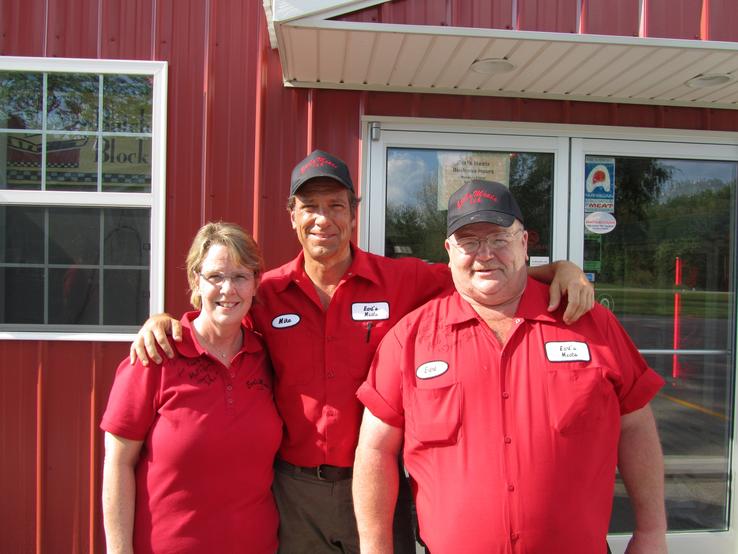
I am now rethinking even this limited meat option.  It had been sitting in the back of my mind that even meat raised at the kindest of farms likely goes through USDA-“overseen” slaughterhouses, with their 3-chickens-a-second conveyor belts, and an episode of “Dirty Jobs” — in which Mike Rowe shadows Earl’s Meats, a mobile butchering operation which travels to clients’ farms, slaughters their stock, and butchers the carcass, producing wrapped meats ready for the kitchen — implied that it is actually required that this happen.  The episode pointed out to me that the meat butchered in this way was unsuitable for sale to the public because it had not been slaughtered in a USDA-inspected slaughterhouse.

This means that any meat to which I have easy, retail access, short of something I have slaughtered personally, has been processed through a USDA slaughter operation and has therefore been in the tender “care” of a high speed slaughter plant, or one of the new USDA-inspected mobile units, which can potentially process 30 head of cattle a day.  This means that it’s time to drop the “small farm” meat and become officially vegetarian, because there is currently no such thing as “humane” meat.

As a side note, here’s the Mobile Slaughter Unit Compliance Guide from the USDA.

Shelter Stories

The man is clearly very sad to be leaving his dog at the shelter.  He is also clearly deaf.  His hearing friend and companion is comforting him with hand signs and hugs as he says goodbye to the little female long-haired Chihuahua, whose big, frightened eyes never leave his face.

His companion is filling out paperwork, explaining to the shelter personnel that they are moving, somewhere the dog is not welcome.  The dog is terrified, trying to hide behind the legs of both men, enclosed in an eerie circle of caged, staring shelter cats and their flat, yellow-eyed welcome.  The leash encloses legs like a hungry snake.

The deaf man catches the dog’s attention, leans down, and carefully makes a very clear signal several times with his hands.  The dog stares at him uncomprehendingly, but with every line of her body desperate to know what he wants.  Signal.  Signal.  Signal.  The dog vibrates with urgency.  What does he want??!?

She can’t obey him.  She doesn’t understand him.  He stops signaling — her desperation to understand him has at least stopped her getting underfoot.

His companion finishes the paperwork.  They lift the dog and hand her to a shelter worker, who gives her a sympathetic squeeze as she trembles.  The men start for the door, then the deaf man abruptly turns and gesticulates, mixed gesture-and-speech.  “She doesn’t….”

The shelter worker tries, but her look mirrors the dog’s.  “I’m sorry?”

Paper, a pen, a practiced search.  In big, careful letters, he writes: SHE DOESNT LIKE BISKTS on a post-it note.  He draws a little cartoon bone beneath: she does not like dog biscuits.  The shelter worker nods solemnly, points at the bone and shakes her head.  No biscuits.

Shelter Stories

When I got married, my mother congratulated me: “Now you’ll have a spouse to get you out of any situation.  ‘Sorry, I can’t view your vacation photos, Vicar — the wife needs me at home.’  ‘Can’t make it to your dog’s birthday party, Helen — the husband needs me to run some errands.'”

It turns out that having a spouse is a wonderful excuse everywhere.

I: “My wife just went to jail.  This is her dog — I just don’t have time for it.”  The Lhasa Apso and her four three-week-old puppies arrive in the footwell of a large and expensive pickup truck, driven by a man who cannot spell “Lhasa Apso”.  A gap-toothed three-year-old grins innocently as a worker fishes the puzzled, tense dog and her brood out of the truck.  Driver and son don’t even follow the dog indoors, filling out the paperwork from the cab of the truck and driving swiftly off.

II: “I don’t know — she told me to bring it in, so I did.”  The miniature Schnauzer is six months old, freshly groomed, terrified, and self defensive.  “Dad” carries him under one arm like a football, shrugging one shoulder, gesturing with the dog.  A shelter worker cautiously drops a slip lead over the growling dog’s head, makes careful friends, and carries him away.  In the cage, wearing his expensive collar and tags, he will continue to growl, with huge, wide eyes.  Dad doesn’t see this.  He fills out the paperwork and walks away.  He tosses “Poor puppy,” into the air, a parting gift as he strolls out the door, getting on with his day.

Shelter Stories III

“He’s a Boxer, chocolate, with white spots, about this big, and wearing a red harness,” the man says, gesturing with his hands.  “Haven’t seen him since Wednesday.”

The shelter worker sympathizes, but there are no dogs fitting that description here.  “Where did he get lost?” she asks, starting to fill out a “lost dog” report.

“Well, every day I keep him out on a chain, and when I get home in the evening I let him off, and he just has the run of the neighborhood, you know?  He always comes back.  Everybody knows him.  So anyway, on Wednesday I get home, and I let him off, and off he goes as usual, right?  Except this time he didn’t come back.  And he didn’t come back Thursday, and he didn’t come back Friday.  I just don’t know what could have happened.”

“How old is he?” asks the worker.

“About a year.”

Shelter Stories II

“It’s time to give her up for adoption,” says Mom.  The dog is a smiling, amazingly obese Basset, drooping, bemused, her tail gently wagging.

“She just doesn’t like my grandchild.  She’s snapped at him a few times.  And he just wants to hug her and love on her — we just can’t take the chance that something will happen.”  Mom finds tears in her eyes, fishes for a tissue.  “We have two other dogs — they’re fine.  It’s just her.  She’s just not good with small kids — he’s two.  And he’s staying with us now, there’s nothing we can do.

“She’s my baby — but he’s my baby.  I don’t want to give her up…”

Wag, wag, wag.  The dog’s nails are long and untrimmed, and she is wider than she is tall, but she is smiling, smiling.  Dad hands the leash to a shelter volunteer.  Out the door they go, one last glance back, and as the departing car goes past the front door the dog pushes her face against the glass, puzzled.

A mother with two small children and another imminent comes in, reluctantly giving up a kitten for which she simply has no time.  The kids, aged around four and five, spot the recently surrendered dog and come wiggling over.  They sit in front of her, pelt her face with their hands, giggle and squeal, marvel at her shortness and wideness.  The volunteer holding the dog’s leash keeps a wary eye on her face, watching for the slightest sign of tension, the merest inclination to snap.

Wag, wag, wag.

The dog stands patiently, gives and accepts kisses, and her smiling expression never changes, although her eyes stray to the door.

DIY Mad Scientist Kit Only $99.99

There’s a viral video going around of someone playing “Insane In The Membrane” through the chromatophores of a squid, causing a pretty visual effect.  I’m sure the squid would have been thrilled to know it was sacrificed in the pursuit of such valuable knowledge.

There is a very real possibility that the squid was alive for this “experiment”.  There’s no indication in the video itself, and I can’t find research by the lab (run by Roger Hanlon at the Marine Biological Laboratory in Woods Hole, MA) which describes its preparation of squid fins for such video, but here is another video by the same lab, which purports to be of “live squid skin closeups” and shows extremely similar footage.  Is anyone else watching the “Insane” video and seeing a live squid being electrocuted so that someone can watch pretty colors dance to Cypress Hill?

Photo via mjas on morguefile.com

Hanlon’s lab is doing actual research on squid coloration and how the animals use color for visual communication; the company responsible for the frivolous “Insane In The Chromatophores” video is called Backyard Brains, and bills itself as “DIY neuroscience for everyone“.  This makes me nervous.  On the one hand: encouraging kids to think about science and to play with the world: this is good.  On the other hand: encouraging kids to rip the legs off live cockroaches to demonstrate neuron activity…”Don’t worry, they can grow back“?  Really?  Their newest “experiment” is the RoboRoach, which encourages kids to wire live roaches up to little electronic control units and steer them around.  I’m speechless.

I’m all for teaching kids science!  Learning is valuable and education is vital, and hands-on experiments are great for getting kids involved and interested.  But…surely there is some other way to demonstrate this phenomenon?  Even if the insects are, as the authors claim, anesthetized, and the hands-on research really does “increase understanding of neuroscience concepts“, what is this teaching kids about treating animals as things whose needs do not matter compared to ours?  How long until little Bobby wonders if the cat also twitches when you wire him up?

Favorite sentence: “It’s very important to avoid anthropomorphizing the cockroach with thoughts like ‘If I do not want my own leg cut off, then the cockroach does not want its leg cut off.'”

That makes it all terribly convenient, doesn’t it?  The cockroach doesn’t care about the loss of a leg in a way it can communicate to us (or in a way that we care to receive), therefore it just doesn’t care, and therefore we can just lop the leg off a cockroach whenever we like, to show kids things about nerve conductivity.  Even if it is valuable science — maybe we could just do this once and then share the video?  We could set it to Cypress Hill.

Apes Still Quite Bright, Humans Remain Insecure

Just a little interesting thing I noticed about this New Scientist article about Kanzi, a bonobo who has, over the course of 30+ years working with humans, learned to do…something.  In fact, he’s learned to do a vast number of things, but it’s hard to say what he knows, because people keep tripping over the language used to describe what he knows.  The question appears to be whether, when an ape, say, uses matches as a tool to start a fire (and then cooks a marshmallow on a stick over it), the ape is using matches as a tool to start a fire, or if it is imitating the uniquely human ability to use matches as a tool to start a fire, without actually having that ability itself.

Apparently the scientists have taught Kanzi how to make stone tools which resemble those made by our ancestors.  And here he is in a video, spontaneously making one and then using it to open a log in which some food is hidden.  The New Scientist article duly reports upon this ape which can make and use primitive tools which closely resemble early human tools, but ends with a lot of not-entirely-impartial reassurance that this tool-using ape is not really a big deal, because Kanzi was taught by humans to perform this task, and “whether the behaviour could arise in nature is unclear”.  Why does it matter whether apes can make stone tools?

One of Jane Goodall’s most controversial discoveries about chimpanzees (cousins to the bonobo, and also apes) was that they made and used (not stone, but plant based) tools.  This disquieted people because humans had been using “use of tools” as one of the distinguishing characteristics which “set man apart from the animals“.  This begs the question Why does man need to be set apart from the animals? but I digress.

The discovery was made almost fifty years ago, but we have not yet gotten over this issue.  Look at how worried the New Scientist article is about implying that apes can use tools, or behave even the least little bit like humans!  “Since these animals are raised in unusual environments where they frequently interact with humans, their cases may be too singular to extrapolate their talents to their brethren.”  I might say they were being cautious about not extrapolating things from the original research which are not strictly true, but when the same publication wrote an article about how scientists have produced a substance which temporarily halts reproductive ability in male mice, it did not use a title like “Scientists Temporarily Halt Reproductive Ability in Male Mice”; it announced “First Non-Hormonal Male ‘Pill’ Prevents Pregnancy“!  Clearly this is not a publication unduly worried about implying possibly misleading things through overenthusiastic interpretation of research results.

Likewise, the title of the Kanzi article is the somewhat sensationalist “Bonobo Genius Makes Stone Tools Like Early Humans Did” — an assertion which the rest of the article then goes on to state, then almost flat-out deny — and there, again, is the bias.  How do we know Kanzi is a genius bonobo?  Apes are hard to keep in captivity — our sample size in this particular research is two bonobos.  Kanzi could be a genius, unusual bonobo…but is it not more statistically likely that he is somewhere under the “average” part of the bonobo bell curve?  Why is it so important that he be exceptional?

The more we relate animal behavior to human behavior, the more we blur the line between human and animal, the less we are able to think of ourselves as something other than animal.  This causes problems on multiple levels:

Now we must redefine tool, redefine Man, or accept chimpanzees as humans.”

– Dr. Louis Leakey

Contrast the New Scientist article with articles from the Huffington Post and the Daily Mail, both of which serve a more animal-friendly clientele.  No mention of how this behavior may not occur in the wild (Do wild bonobos need stone tools?  Is there evolutionary pressure for such a talent?), just a lot of admiration (and, alas, reference to that bedeviled “baby chimp feeding a baby tiger” photo which really needs to stop getting passed around).  In fact, both of these articles actively paint pictures in which Kanzi is replicating the first steps of the human journey towards tool use and civilization.  What an interesting contrast of style!